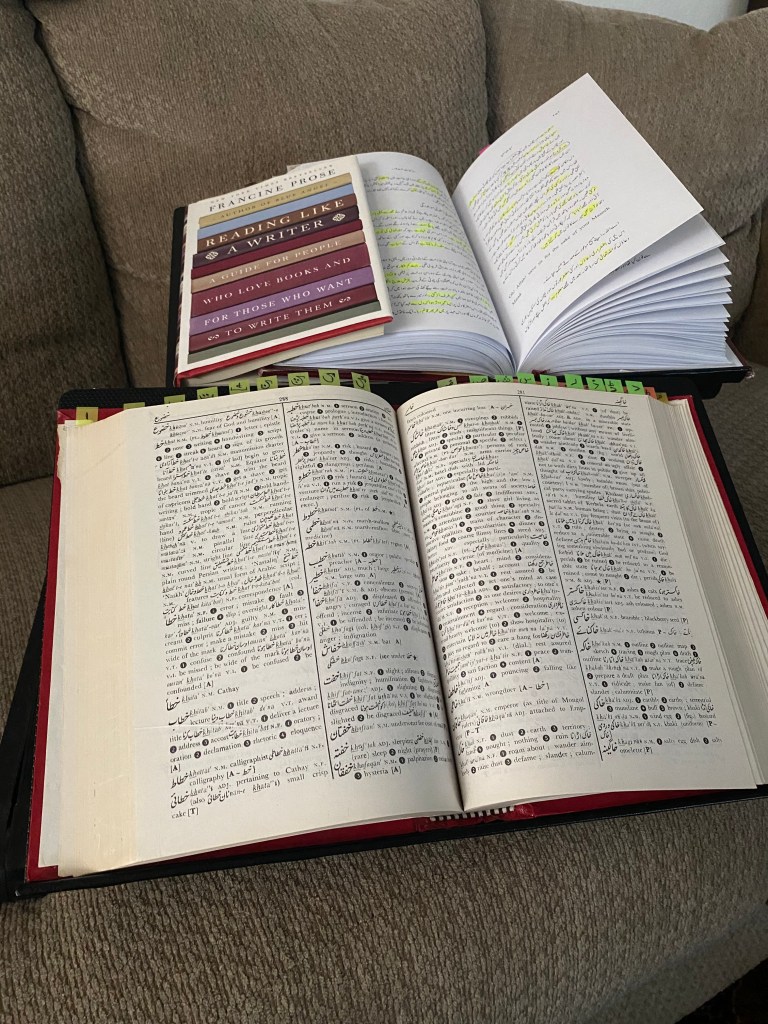
Some time ago, I published a post entitled How These Poems Get Translated. Only now have I discovered that the introduction intended to accompany it never saw the light of day. Having finally caught this curious omission, I see no reason to let another moment pass before setting matters right.
Exploration Tips
The verses that follow, though absent from the book to which this website is dedicated, represent the natural culmination of a conviction I expressed at the very outset, over at the Ark of Noah: that Mirza Ghulam Ahmad’s original Urdu work, Kishti-e-Nuh, possesses an expressive power that borders on the lyrical. What better way, then, to bring this website full circle than with a tribute in verse—a tribute to the beauty, grandeur, and lyricism of his own poetry?
I invite you to bear in mind a second point, one I also emphasized on the Welcome page: that “mapping” the original Urdu into English—preserving not merely its meaning, but something of its music, cadence, and spirit—was far easier said than done.
But I had to try.
The translation that follows is the fruit of that endeavor. To borrow my own metaphor, it is an attempt to map the original poem into English while remaining faithful to its narrative, imagery, and devotional fervor. Its source is Mirza Ghulam Ahmad’s A Tribute to Islam and to Its Founder, a poem he published in 1893 as part of one of his books.
One final point, if you will indulge me. This preamble has admittedly begun to wander, but I promise that this last observation will help you appreciate what follows. Wherever the Urdu original offers a single couplet—a pair of rhyming verses—my English rendering offers two. This deliberate expansion afforded me the freedom to preserve shades of meaning, nuances of expression, and turns of thought that might otherwise have been sacrificed at the altar of rhyme.
There is, after all, a world of difference between translating words and attempting to preserve the poetry that gives them life.
And now, having spilled quite enough digital ink for a mere preamble, I shall impose upon your patience no further.
What follows is my translation—or, if you prefer, the culmination of this rather ambitious experiment in poetic “mapping.” May you find in these English verses at least a glimmer of the beauty and spiritual ardor that illuminate the Urdu original.


Leave a Reply